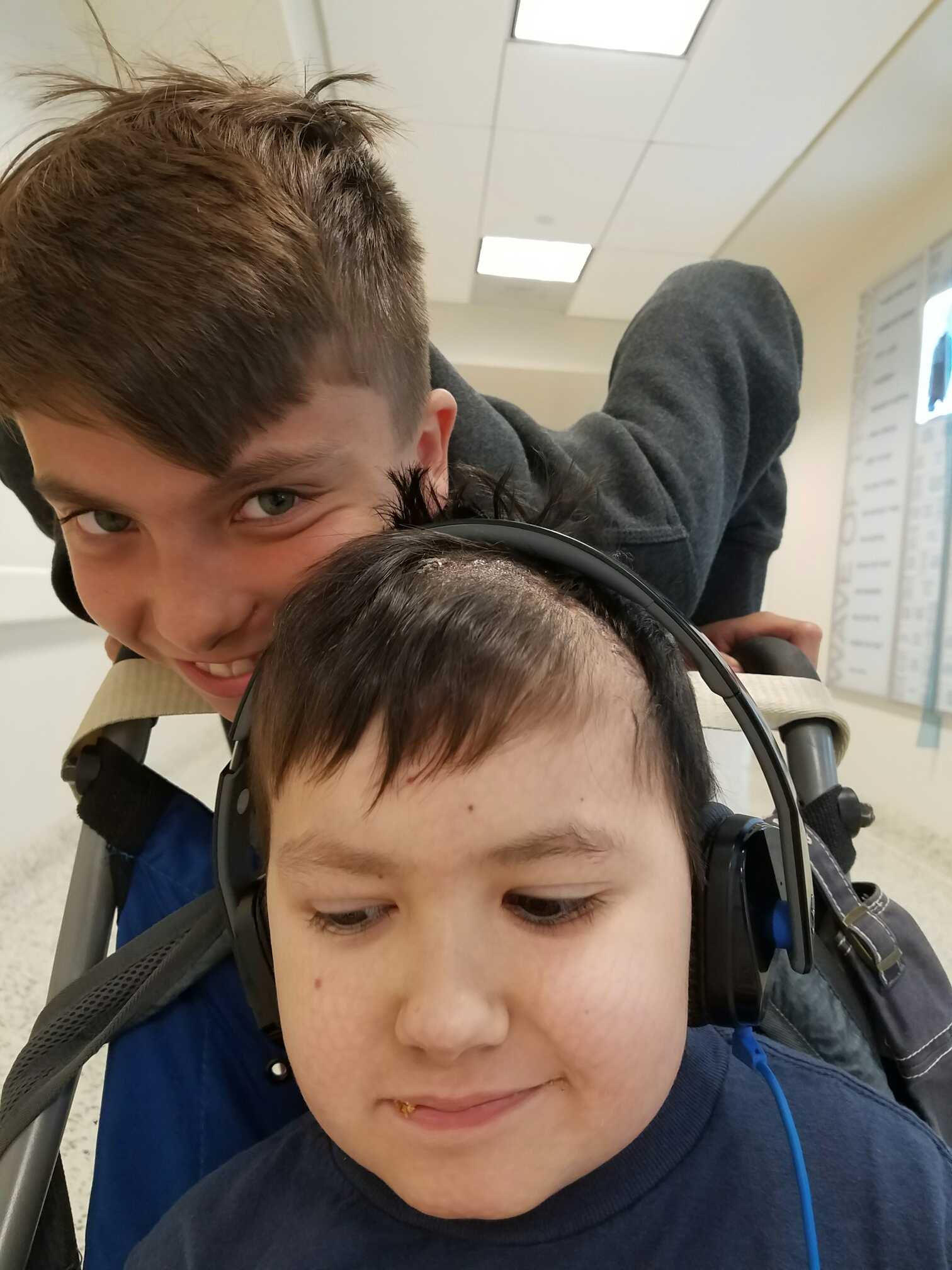
Happy St. Colin’s Day, round six. I neglected to post anything last year—not because I planned to (I did start writing something) but life got in the way and then it turns out I wasn’t too attached to the idea in the first place. Milestones are simultaneously arbitrary (what does a year mean in the span in the life?) and meaningful (the return to certain times of year brings with it the memories and the memory-feelings).
Continue reading The Unexpected Metaphor of a Dreary DawnLatest Blog Posts
Gratitude is a Fierce Beast
As families in the United States gather to celebrate Thanksgiving, people far and wide take a moment to consider and share the things they are grateful for. An opportunity for warm remembrance, it also casts in sharp relief both distance and absence. For the bereaved and estranged, this obvious observation sits like a razor blade embedded in the edge of all holidays.
Yet this is not the full story of gratitude, which is also the engine that drives resilience. Gratitude allows us to identify the solid post within the maelstrom, the good thing that is a good thing and not just a silver lining. The problem is that the silver lining exists only because of the storm cloud.
I recently wrote this post–that I invite people to read and share–for St. Jude’s Perspectives blog series about our experience at the hospital. These thoughts about gratitude sat at the center of the piece implicitly but I never exposed them as an idea. We are grateful for many aspects of our experience with St. Jude, including the gift of a good death.
We should all be grateful when we or those we love have a good death. It is no silver lining; it is the last thing any of us will experience and that experience remains with those who outlive us.
My Thanksgiving gratitude may seem macabre or even unseasonal, but that is because it occupies the spaces that we are culturally uncomfortable discussing. These conversations don’t fit neatly in a Tweet, nor do they belong in a pithy statement laid over the picture of a roasted turkey. But they do belong somewhere.
The things we are grateful for are central, not incidental, to the human experience. This is why gratitude is fierce and why it can carry a heavy burden when times are tough. Let it be the beast that stands by your side and gnashes its teeth at the misfortunes that come your way. May all your days bring the gift of gratitude.
Happy (St.) Colin’s Day
At first it was funny: of course Colin would slip off the mortal coil on a holiday known more for drunken reveling than St. Patrick himself, who isn’t even a saint, had nothing to do with snakes, and probably lied about being abducted and imprisoned when he was just avoiding public service (don’t read this Wikipedia entry if you prefer the fanciful version of his story). But it’s true that Colin was a leprechaun—a prankster and funnyman—though he wouldn’t have hoarded his gold. He would have either shared it or invested it in a fantastic project to better the world with free taco trucks or islands floating above the ground to preserve nature.
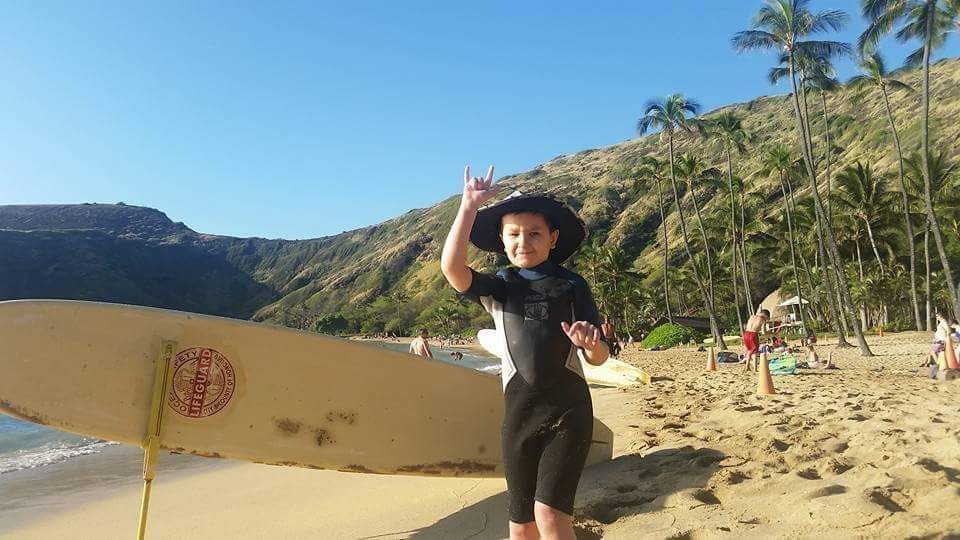
One Day
I can’t say that I’m grateful for the coincidence, but without it I would not remember the exact day of Colin’s death. Doing so is unimportant to me and I halfway resent having a solid milestone to mark the fullness of feeling that comes when it is distilled into the pinprick of a moment in 365 days long with undulations of nostalgia. With no conscious force of will, it rises up and would be more manageable to distribute over a vague approximation of days sometime in the late teens of March.
But so be it, and now the assault of the leprechaun traps and glittering shamrocks of the suddenly Irish contrasts sharply against a very different collection of thoughts and memories. They are not all bad, of course. Colin’s life was improbable and outsized, maybe even more so than the most outlandish version of Patrick’s legend and certainly better documented.
A Life Well Lived
The anniversary of someone’s death is best focused on the life lived and I encourage that wholeheartedly. What a life that kid lived, much due to his own ability to look past the challenges and barriers and embrace what he had when he had it. Colin inhabited the moment and it’s easy to look back on the joy he experienced and the satisfaction he got from relationships, companionship, and his unlikely accomplishments.
As a parent, these memories and the knowledge that he was part of a supportive community have insulated me from shredding grief. It is much less of a loss to know that he continues to be held by so many, even in small ways. But, also as a parent, I cannot escape the weight of past decisions that I doggedly question. Even if I avoid thinking about it, self-doubt bubbles up in the mind space I cannot control and the dream world crafts novel horrors that are impossible to slough off in the light of day.
The torturer is my own psyche, breaking free of the constraints of the cognitive strategies I can deploy when I am in full possession of my mind. If that’s even possible in the first place, but at least the parts that are within my conscious control. That hidden devil also likes to populate the spontaneous recollections that pop up through the day with darker moments.
The finest irony of the anniversary of Colin’s death is that, unforgettable as it is, it brings a separate flood of positive memories. Between the swathes of green on social media and in private messages and texts, I encounter Colin’s grinning face and see how many people he touched and how many souls still vibrate with his spirit.
Tapestry of Grief
Nobody has ever asked me what it is like to be a bereaved parent but I couldn’t answer concisely if I tried. We are all different and we are all different on different days. Together, we weave a recognizable tapestry but, more often than not, there is no unity in loss outside of loss itself. Sometimes, the silent need awaits the kindness of others, which is an obtuse way of stating how welcome the messages and pictures are. I say this for myself—today—and for others who may be missing their own leprechaun on another day.
As I’ve said many times, Colin had tremendously good back luck and, apparently, the luck of the Irish to boot. St. Patrick’s Day is truly his holiday and always will be, even if it takes a well-intentioned coup. With this in mind, I embrace the cause and his face will always loom largest no matter who claims ownership of the day.
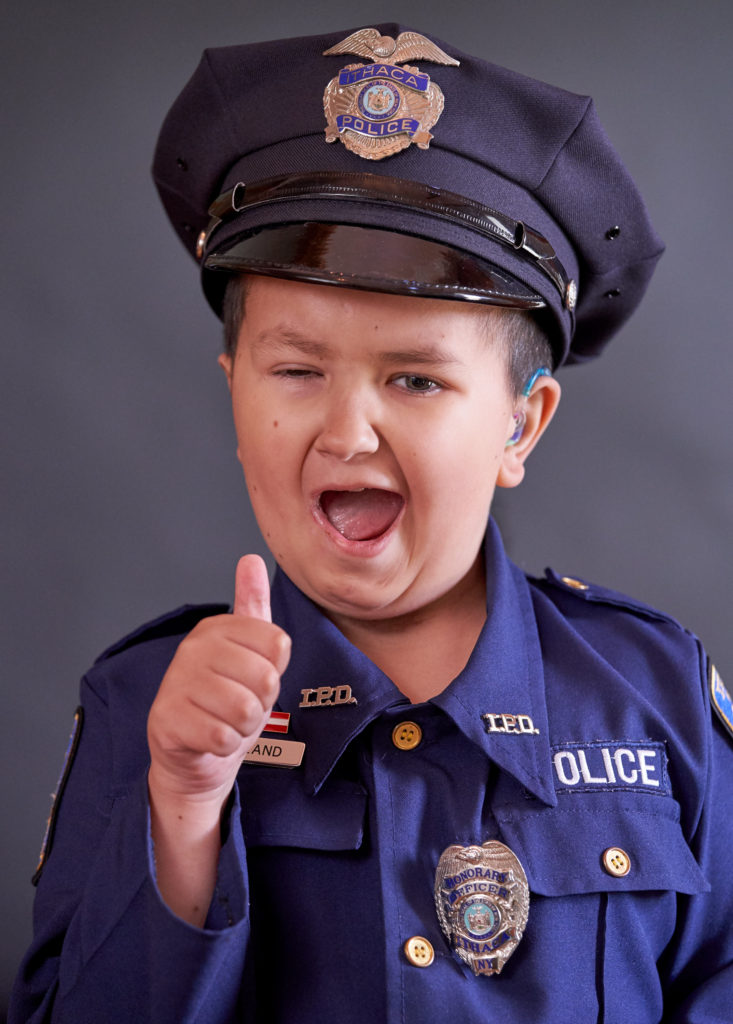
St. Patrick’s Day is truly his holiday and always will be, even if it takes a well-intentioned coup.
Coming of Age
Thirteen years ago, you slipped from my body into the hopeful promise that greets perfectly formed infants with only the future ahead of them. The occasion of this milestone is more difficult than the two that preceded it, ringing with an extra hollowness in your absence. Under the pressure of this moment, I came to understand how this is different—not in the way that the heft of grief normally undulates—but in a way that is singularly attached to this age: thirteen.
I watch your friends cross the threshold into teendom, one by one, getting lankier, adultish, and truly becoming who they are. Every parent watches this process in amazement and horror, powerless to accelerate or slow the pace of change.
But Colin, dear Colin, will always remain a child. We never had the luxury of imagining you grown up, nor have I ever entertained fantasies of a version of you that never collided with ependymoma. To cope with reality, I had to remain in the present and not indulge in dangerous games of what-if. I can imagine pieces of your personality expanded into the fullness of adulthood: gregarious, fun-loving, witty.
These snippets are not even remotely close to the fully formed humans who are sprouting in either your brother or your budding peers. The dissonance between the unimaginable and the raw truth of pubertal emergence is, to put it in a single word, heavy.
The world spins. The sun rises and sets as it will for longer than humanity will tarnish the earth. And a birthday becomes a monument to the distance between the present and the past. It is also more than that; it is an occasion to remember and celebrate the guffaws and cuddles and the fullness of a life well lived, if short.
But for a minute, I ask permission to sit with the weight of this number, 13, and its indifferent mockery. Maybe the solution is to ignore the numbers and focus only on the sunbeam smiles and indominable spirit that now gambol nimbly in the ether, freed from their corporeal bonds. Let it be so, the birthday wrapping in a fantastic bow the triumphant perfection of tragedy that willfully sheds its own misfortune. And let that delightful gravity pull stronger than the light-sucking grief that turns our heads to loss more than Colin’s legacy: perseverant light and the embodiment of hope.
Closed Doors, Open Hearts
The curtain is closing around America. In one week, everything has changed. The inexorable threat that has been invisibly barreling down at us is now giving evidence of its arrival. Ominous vibrations of the rails, dirt jumping on the tie rods, tell us the train is on the tracks. It’s coming.
This is a unique moment in the history of this country and one that woke me up before my alarm already composing my thoughts. Shortly, the sound of the train’s whistle will be audible to all except the utterly deaf and the long puffs of steam will be visible to all but the utterly blind. There is no genius to the prognostication that there will be a great toll of human suffering in the coming weeks and there is little point to remarking on that fact.
The arrival of COVID-19 has gone from an intellectual exercise to an emotional one that has been accompanied by a spasm of hurried preparation. Though I don’t condone the hoarding of toilet paper, I understand the impulse to stock up on items we would rather not live without knowing that challenging times are ahead. The true panic arose in those who thought we would somehow be immune and that the dearth of cases was meaningful, even in the profound lack of testing. Many seemed to believe this was a foreign disease, even as it transitioned from China (very foreign) to Italy (not as foreign), but it now shows its face as American as apple pie, waving the stars and stripes and singing the National Anthem.
More importantly, even for those of us who have watched the numbers and studied the insidious behavior of this beastie, things are different now. Confirmed cases pop up closer to home and the threat I knew lurked in our communities is starting to show itself. We stocked up weeks ago, weeks before the rush, but it didn’t feel like we were about to be carried on a wave, thrust off our feet by a natural force that we cannot control. We can only choose where to stand on the beach and we chose to stand pretty damned close to the ocean.
At this moment, we are the sand piper pumping its little legs running away from the approaching wave. The bird can spread its wings and fly above the ocean but we cannot, so we run—or try to—as fast as we can. The wave will hit us; the question is not if but when and how much. Run, little sand piper, run.
Here is the thing: the sand piper is an individual creature that makes the decision to stand too close to the ocean and to run when it can, but our current emergency is a collective effort. Right now, social distancing is the only tool we have left to try to make this disaster manageable. Doing it is not simply an act of self-preservation but one of community responsibility.
This crisis arrives in the midst of divisive politics and divisive thinking. The initial response, bifurcated by political lines, is now unified by a single goal: help your neighbors; think of your community; protect the vulnerable; save your fellow Americans. As horrifying and ominous as this moment is, it is also glorious and wonderful, an unexpected about-face to bitter gnashing of teeth.
To be fair, many people are being dragged kicking and screaming into the effort and many others are terrified of the personal consequences of a protracted economic slowdown. These are real and legitimate issues but fortunately are also visible to lawmakers and governments. In the same spirit, we will get through this and we will do everything we can to make sure that the American people survive as unscathed as possible.
This moment in our country’s history also coincides in an important personal one, the two-year anniversary of the death of my son Colin. Everything we are going through as a nation feels very familiar to me. We knew for several years that his brain cancer was incurable, yet he endured and we kept finding pathways to give him more time. After we struggled in despair through Christmas, he reached his ninth birthday, then the next Christmas, then his tenth birthday and another Christmas, before his brain was too crowded out to keep his little body going.
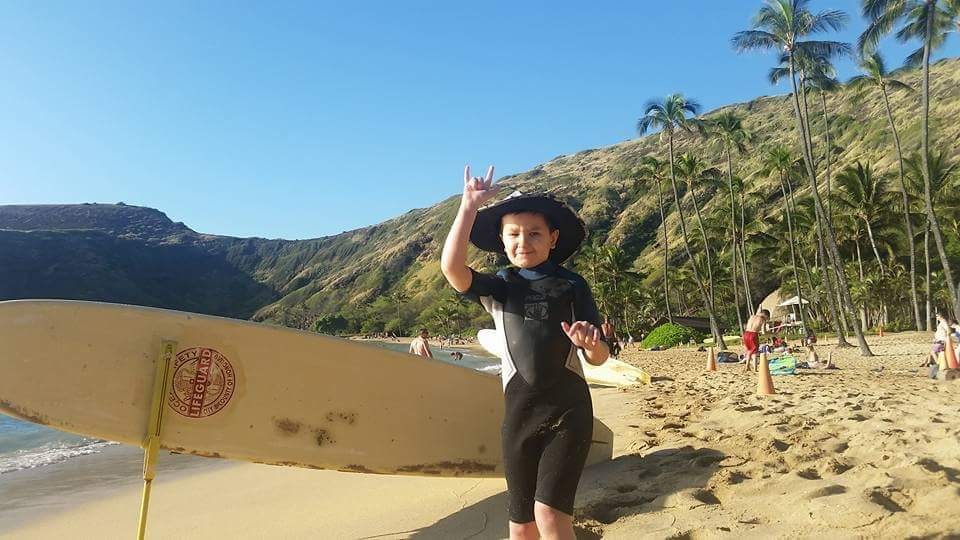
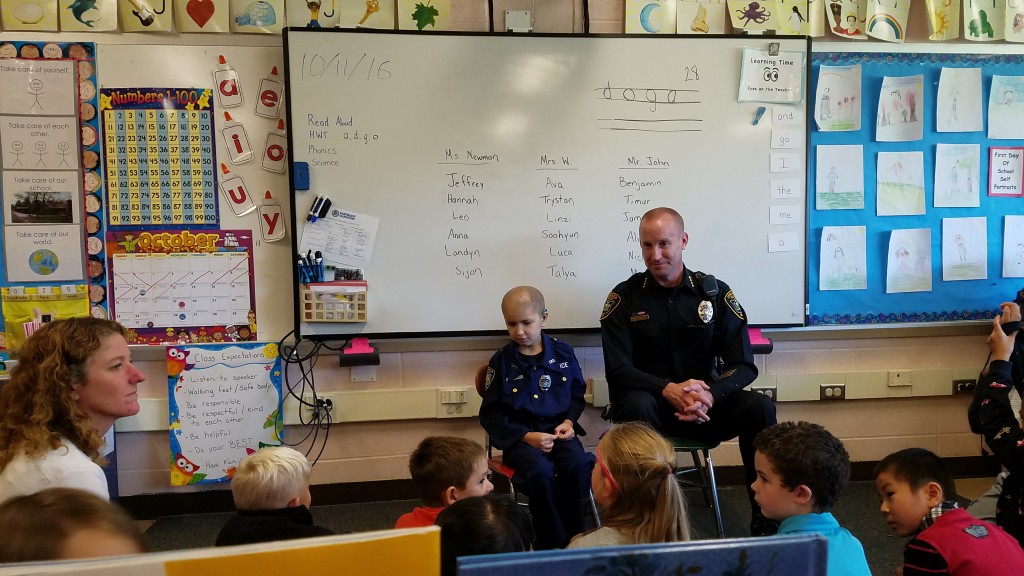
The entire time, we knew what was going to happen but lived in the moment until his moment did ultimately arrive. In the meantime, he joined the Ithaca Police Department and had a stellar career with the force, finding satisfaction in an ongoing relationship with his comrades and the community. He was Officer Colin and he emblemized hope and commitment to helping each other.
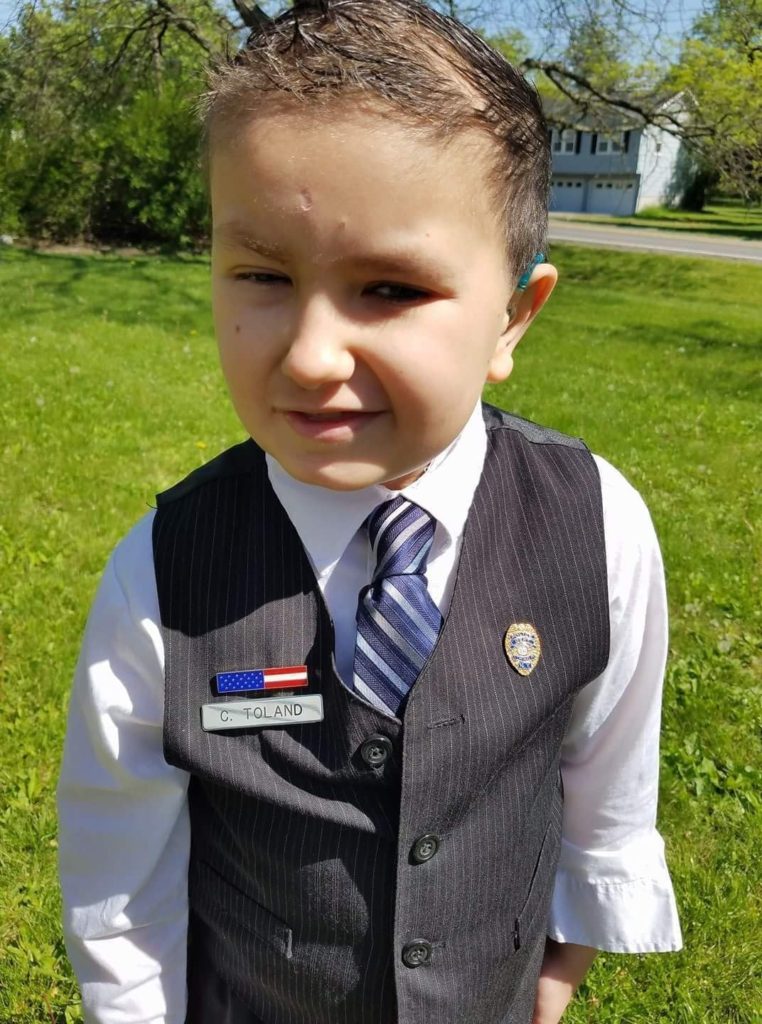
I am glad that Colin didn’t have to live through this, but it feels like he is here. He would have been frustrated by social distancing and would have decried the selfish emptying of shelves driven by fear instead of necessity. However, he believed deeply in the importance of helping others and he would have embraced that mission, not just through social distancing.
I am seeing it now: people checking in on each other and neighbors finding ways for the vulnerable to reach out for help even if they’re not connected by social media. It is the video chat drinks and the random texts, the overwhelming number of volunteers offering to help the school system provide meals to children and families in need. This is Colin.
Personally, I feel acutely prepared for this after dealing with the upending of our lives that came with Colin’s initial diagnosis. Ask any cancer parent who’s endured the rigors of high-dose chemo: the vigilance, the hand washing, the fear of contact are all part and parcel of that experience. These are obvious and non-trivial parallels, but it truly goes deeper than that.
I have described it as passing through the veil and becoming a cancer parent. It’s a one-way door. The world changes on a dime: routines, priorities, and goals. Things that you took for granted are now different. Was our child going to survive? Would he ever be able to eat, walk, or talk again? The future Colin that we had imagined before the diagnosis evaporated in a second, not to mention the upheaval of treatment and a surprise move to Memphis for nearly a year.
We cancer parents understand the chaos that is now happening on a national level. So many questions and a vast sea of uncertainty beyond the health and medical concerns. Will the kids finish the school year? Probably not. Sports, formals, graduation and the concomitant parties, all gone. This is a season rife with disappointment and unexpected change.
Yes, I get that this is disorienting and distressing, but I also know there is light at the end of the tunnel. I walked out the other side the better for it. At the moment, I see a massive orientation around what is most important in life. Everything else gets sloughed off and what I see remaining is our connection to others. Social distancing is generating new manifestations of social outreach and it is forcing people into a community mindset.
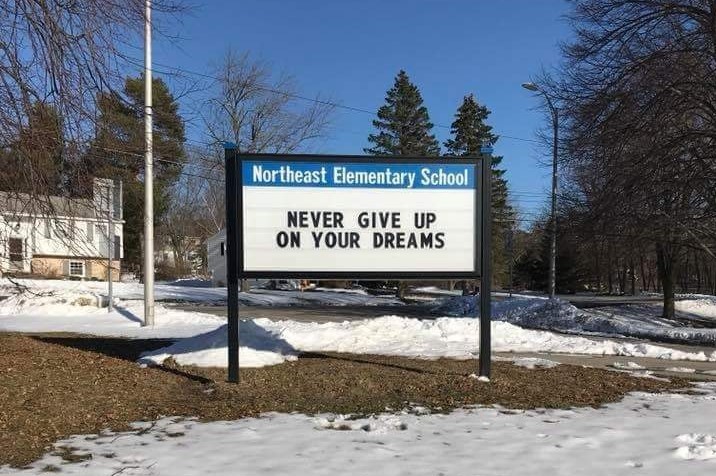
How enduring these changes will be is uncertain. As with all things, your mileage will vary. I am especially curious about the softening of political boundaries once the intense need for national unity recedes. In this moment, I would like to imagine that it will persist at least in some form and that tragedy can bring with it constructive good. Colin is next to me, whispering in my ear, “Never give up on your dreams.”
The Future Awaits
The seasons have flown by in a time lapse blur, flashes of the momentous and the mundane gliding by with relentless speed. It should come as no surprise that Colin has continued to carve his own way in the wilderness, one that nobody did or could have predicted. Following the September news that the tumors had exploded and that his brain was swollen with edema, he continued to improve clinically. The police work seemed like a magical balm, and maybe it was, as the days and weeks slipped into months.
The Exquisite and Fragile Joy of Life in Uncertainty
Fall has arrived, carried on the sharp wash of cool air streaming through the open window in the morning. I wish I could push it back, force the leaves to turn green again, and will summer to stay in place. Time is not our friend, and the change of seasons is yet again a reminder of the puniness of human desire to bend the world to our bidding.
Continue reading The Exquisite and Fragile Joy of Life in Uncertainty
The Perpetual Outlier
Colin has had a wonderful summer and really relished being at home. Most significantly, he has enjoyed a renaissance of himself: he is engaged, motivated, curious and vibrant. If Colin finds an adult to buttonhole in a conversation, his engine will start and keep going. On our return from Memphis, he consumed the entire flight from Philadelphia to Ithaca regaling a new friend on a variety of subjects. The real resurgence started shortly after leaving Memphis and has only continued since then.
Gentle Fire
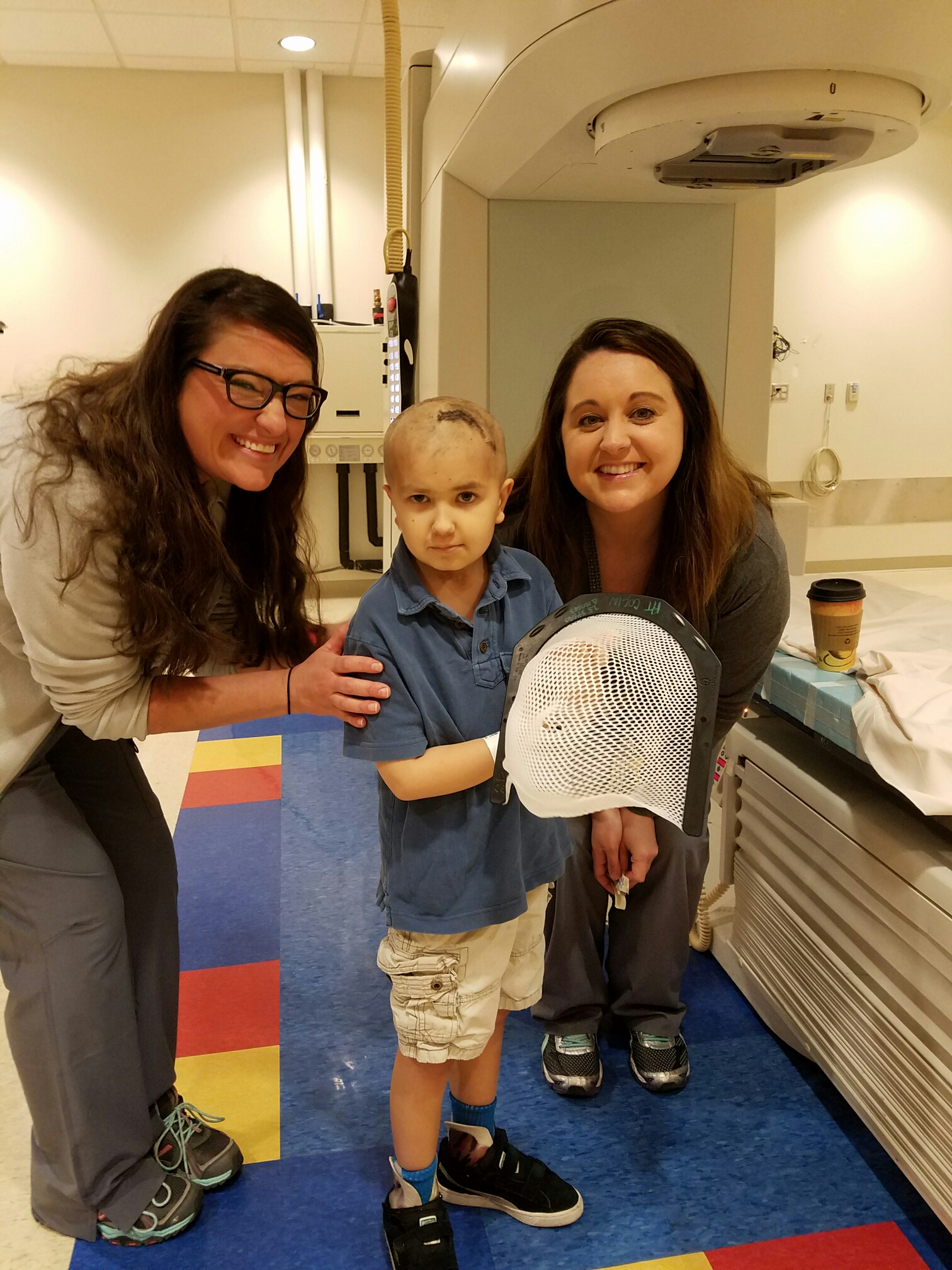
Colin lies down on the table, head nestled in a custom head rest that still contains long strands of the hair we had to cut off a week before. I help him settle into his spot, but he knows the drill better than I do. I straighten his head and the tech puts the mask in place. He closes his eyes under the plastic mesh without complaint and she rotates clips that keep it in firmly in place during treatment. They show me how they line him up, red lines crossing to match pen marks on his skin that they redraw over small tattooed dots and lines on the chin of the mask.
Lucky 13
Colin has completed 13 of 30 radiation treatments and is more than halfway through the portion of treatment (20 sessions) that involves the whole brain and spine. This is our lucky 13, lucky in so many ways. We are lucky to be here at all and witnessing the joy of a child who had been slipping away from us only a month ago. We are lucky that he is cruising through treatment and cooperative with the process.